Showing posts with label American Cars. Show all posts

Wednesday, October 9, 2013

Worldwide Cars // ISYSCARS Story Board

Worldwide Cars // ISYSCARS (Logo)


(Made by Punzalan.M, Han.J and Ho.H)


Throughout this blog, we, ISYSCARS, will entertain and educate you with a breathtaking range of not only the fastest but most stunning cars you have will have ever seen. We have specifically categorised many worldwide known cars and our blog will consist of a variety of Japanese, European and American cars. 

Our idea is to make it easy to view a car, model or even country of the car! The list of cars will be on the right-hand side of the blog so you can easily click on the car of interest. This will enable you to view its page where you can see all our thoughts and expressions of the car with of course  a selection of exquisite pictures to aid you with our text. 

Here is a taste of what is yet to come:


  • Ford Motor Company
  • The Mini Cooper
  • Cadillac in Motorsport
  • The GOLF
  • Nissan GTR


(Source: http://www.nissan.com.au/~/media/Images/Nameplate%20Overview%20Media/GTR/14TDI_GTRb051_V2-copy.ashx)

  • Chevrolet Corvette
  • Audi R8
  • Ford Mustang
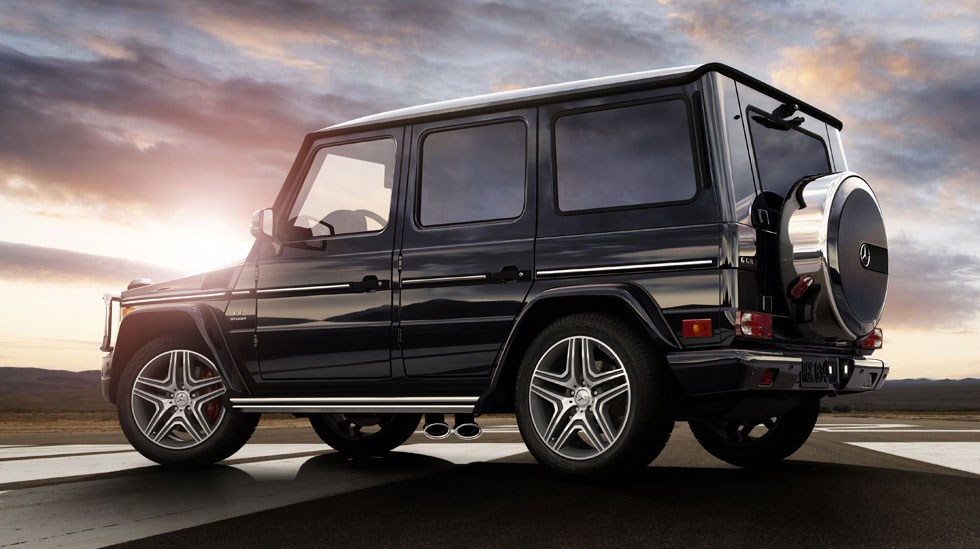
  • G-Class SUV
  • Lexus

(Source: http://img2.netcarshow.com/Lexus-IS350_2006_1024x768_wallpaper_02.jpg)
  • SRT Performance
  • Porsche Panamera S E-Hybrid
  • Mitsubishi Lancer Evolution

(Source: http://www.zcars.com.au/images/mitsubishi-lancer-evolution-x-fq4001.jpg)

Saturday, October 5, 2013

SRT Peformance

SRT Performance 

Do you know what does SRT stand for?

Street & Racing Technology


(Source: http://www.drivesrt.com/news/2012/04/srt-viper-cup-series-presented-by-pennzoil-ultra-heads-to-road-atlanta-for-rounds-1-and-2.html)

SRT is a high-performance automobile group from within Chrysler LLC. It focuses on develop Dodge selected vehicles, such as Viper, Challenger and Charger. Chrysler 300 and Jeep Grand Cherokee. 

Dodge Viper SRT 

"SPEED is EVERYTHING "

The Dodge Viper SRT first put on production at 1992.  It has extreme performance at the time. With a massive 8.0L V10 in front, it produces 400 bhp and 465 lb-ft and all power will be transmitted to rear wheel through a 6-speed manual transmission.

SRT Viper Logo.jpg
SEE what happen when the 16 years heavy modified Viper SRT MATCH UP the latest 2013 Viper SRT!!!! 

The MASSIVE 8.4L V10 NA engine produce 640 bhp (480kW) @6500rpm and 600 lb-ft (810 N.m) @4950rpm
A number of small changes help the 8.4-liter engine both hit those higher figures and drop a few pounds. The trick cam-in-cam variable valve-timing system remains, although the profile of the intake lobes was reworked. Engineers credit this with about 10 of the additional horses. A new composite intake manifold with longer runners replaces the old aluminium piece, dropping seven pounds from the top of the engine and ratcheting power up another 10 horses or so and pumping torque up about 20 lb-ft. An aluminium flywheel cuts 11 pounds, helping revs build faster, and sodium-filled exhaust valves help keep engine temps down as well as saving a pound. In total, the engine is 25 pounds lighter now than its predecessor.


This is the REAL BREAST !!!


Dodge Challenger SRT8

A Classic Modern American Muscle 

The first car that carried the Challenger name was the mid-year introduction of a limited edition 1959 Dodge Silver Challenger. This was a six-cylinder or V8 model available only in silver paint and only on a two-door body. It came with extra features at no cost, including premium white wall tires, full wheel covers, electric windshield wipers, as well as an upgraded interior with luxury fabrics and wall-to-wall deep pile carpeting.
File:1959 Dodge Silver Challenger a "Barn Find".jpg
The First Challenger in 1959 (Source: http://en.wikipedia.org/wiki/Dodge_Challenger)

Check out the Driving Test by MOTORTREND 

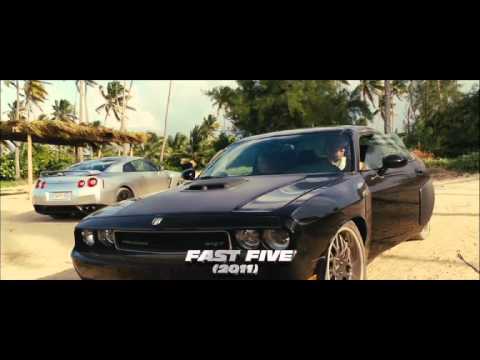
Remember Don driving the Challenger in "Fast and Furious 5" 

Dodge Charger SRT8

An SRT-8 version of the Charger debuted at the 2005 New York International Auto Show. Powered by a 425 hp (317 kW) version of the 6.1 L (370 cu in) Hemi, it also featured upgraded Brembobrakes, and interior and exterior updates. The engine produces 420 lb·ft (569 N·m) of torque. The 425 net horsepower of the modern 6.1 L Hemi makes it even more powerful than the legendaryChrysler Hemi engines of the muscle car era, the biggest of which was rated at 425 gross horsepower. This makes the 6.1 L Hemi engine the most powerful V8 engine that Chrysler has ever put in a production vehicle with a 5-speed automatic transmission.

(Source: http://www.drivesrt.com/2014/charger-srt/gallery/)

Remember this scene?
Yeah! The Charger SRT8 in "Fast Five"

And MORE 
A Million Dollar Charger Drag Race!!!


Chrysler 300 SRT8

The Powerful American Luxury Sedan 


The 300 SRT8 accelerated from 0-60 mph in just 4.3 seconds and finished the quarter mile in 12.7 seconds at 112.0 mph, making it the fastest 300 -- and fastest Chrysler -- we've ever tested. Those figures will match a Chevrolet Camaro SS 1LE or Ford Mustang GT and would surprise Maserati Gran Turismo Sport drivers. Let the 300 SRT8 keep going and it'll eventually reach a top speed of 175 mph -- just save those attempts for the Texas Mile. Braking and handling performance was also top-notch for Chrysler. The big sedan made its best stop from 60 mph in 105 feet and completed the figure eight in 25.4 second at 0.78 g (avg). The 300 SRT8 might have a faster figure-eight time in it, but the relatively skinny 245-width tires and five-speed automatic hold it back.


Check out the Full Road Test of 2013 300 SRT8

2013 Jeep Grand Cherokee SRT

The Ultimate Performance SUV


(Source: http://www.drivesrt.com/2014/grand-cherokee-srt/gallery/)

An SRT-8 (Street and Racing Technology V8) version of the Grand Cherokee debuted at the 2005 New York International Auto Show. Powered by a 420 hp (313 kW) version of the 6.1 L Hemi, it also features upgraded Brembo brakes, large dual performance exhaust with polished tips (exiting out the middle of the rear), Bilstein performance gas charged shocks and modified suspension components, Mercedes-Benz NAG1 (WA580) 5-speed transmission, unique NV146 transfer case, specially designed electronic all-wheel-drive system and interior and exterior updates. A drive shaft from a diesel application, fortified Dana 44 rear differential, and 11.2" (285 mm) wide Goodyear tires in the rear (10" or 255 mm in the front) complement the performance package. The sports tuned suspension allows the Jeep SRT8 to develop 0.92 g on the skid-pad.


(Source: http://www.drivesrt.com/2014/grand-cherokee-srt/gallery/)

To achieve superior on-road handling, off-road gear has been removed to make the SRT-8 lighter. The SRT-8 uses an NV146 transfer case, which uses an electronic-applied clutch pack to transfer 0-50% of torque to the front axle but has no low-range or manual controls. The front and rear differentials are both open, with no limited-slip capability. Its ride stance is significantly lower and the front fascia spoiler gives the vehicle 7 inches (178 mm) of ground clearance. The Grand Cherokee SRT-8 was the first SRT vehicle to wear the Jeep emblem. A total of 11,775 Jeep SRT8s were produced.

Wednesday, October 2, 2013

Ford Mustang

Ford Mustang 

The Pure American Muscle Car

For a car enthusiast, knowing the history of the Ford Mustang is as basic as knowing the laws of thermodynamics are to a physicist, knowing Hebrew is to a rabbi or knowing when the bacon is done to a cook at Denny's. The Mustang is a pillar of American automotive lore, and the car that brought sporting dash and styling at a price almost anyone could afford.
The Mustang has never been an exotic car. Even the rarest, most powerful Mustangs ever built (such as the '69 Boss 429) were assembled with haphazard care by a UAW workforce facing a quick-moving, continuous production line with parts that were shared in common with six-cylinder Falcons, four-door Fairlanes and stripped Galaxies. Handcrafting and taking the time to do something extra special has never been part of Mustang production.
But that hasn't kept the Mustang from capturing the hearts of drivers for nearly 40 years. As ordinary a car as the Mustang has always been, it has always been extraordinarily attractive.

The 1st Generation of Mustang (1964-1973)

external image 1964-ford-mustang.jpg
(Source: http://autos.yahoo.com/blogs/motoramic/first-ford-mustang-owner-still-keys-49-years-123831938.html)

The first model Mustang, the early 65  was available as a coupe or convertible, and featured a base 170-cubic inch six-cylinder engine with a three-speed floor shift transmission. An optional 260-cubic inch V-8 engine was available, in addition to a four-speed manual transmission or a three-speed automatic “Cruise-O-Matic” transmission. The Falcon platform Mustang featured full wheel covers, bucket seats, carpeting, and a padded dash; all for a base retail price of $2,320. According to Ford, 22,000 orders were taken the day of its debut. This came as quite a surprise to Ford executives who had predicted annual sales of about 100,000 units. Within its first 12 months, Ford would sell close to 417,000 Mustangs.

The 2nd Generation Mustang (1974-1978)

(Source:  http://www.askipedia.com/category/travel/)

For almost a decade, consumers had come to know the Ford Mustang as a power performance machine, with performance increases delivered on an almost yearly basis. In 1974, Ford took a different approach. Instead of increasing the engine size, they downsized it. A completely redesigned Mustang II was launched, available in either a 2.3L inline four cylinder engine or a 2.8L V-6. Neither engine was extremely powerful, outputting 88 hp and 105 hp respectively. 

The 3rd Generation Mustang (1979-1993)


(Source: http://www.askipedia.com/category/travel/)

The third generation mustang had two different body styles. From 1979 to 1986 the car had a triangle shaped front clip and four headlights, known by enthusiasts as "4 Eyes." Then in the 1987 to 1993 model years, the front clip had a more round shaping known as the "aero" style. Also in 1986, engines featured EFI (electronic fuel injection) instead of carburetors. Other changes for the 1986 models included an upgraded 8.8-inch (224 mm) rear end with four shock absorbents.

The 4th Generation Mustang (1994-2004)


(Source: http://www.amcarguide.com/muscle-cars/ford-mustang-1994-2004-4th-generation/)

For 1999, the Mustang received Ford's New Edge styling theme with sharper contours, larger wheel arches, and creases in its bodywork, but its basic proportions, interior design, and chassis remained the same as the previous model. The Mustang's power-trains were carried over for 1999, but benefited from new improvements. The standard 3.8 L V6 had a new split-port induction system, and was rated at 190 bhp (140 kW) 1999–2004, In 2001 the bhp was increased to 193. while the Mustang GT's 4.6 L V8 saw an increase in output to 260 bhp (190 kW) (1999–2004), due to a new head design and other enhancements. There were also three alternate models offered in this generation: the 2001 Bullitt, the 2003 and 2004 Mach 1, as well as the 320 bhp (240 kW) 1999 and 2001, and 390 bhp (290 kW) 2003 and 2004 Cobra.

The 5th Generation Mustang (2005-Present)

(Source: http://hooniverse.com/2013/07/05/the-news-for-july-5th-2013/)

For the 2005 to 2010 production years, the base model was powered by a 210 hp (157 kW; 213 PS) cast-iron block 4.0 L SOHC V6, while the GT used an aluminum block 4.6 L SOHC 3-valve Modular V8 with variable camshaft timing (VCT) that produced 300 hp (224 kW; 304 PS). Base models had a Tremec 3650 5-speed manual transmission with Ford's 5R55S 5-speed automatic being optional. Automatic GTs also featured this, but manual GTs had the Tremec TR-3650 5-speed.The 2010 model year Mustang was released in the spring of 2009 with a redesigned exterior and a reduced drag coefficient of 4% on base models and 7% on GT models. The engine for base Mustangs remained unchanged, while GTs 4.6 L V8was revised resulting in 315 hp (235 kW; 319 PS) at 6000 rpm and 325 lb·ft (441 N·m) of torque at 4255 rpm. Other mechanical features included new spring rates and dampers, traction and stability control system standard on all models, and new wheel sizes.

Other Performance Edition of Mustang

Ford Mustang Boss 302
(Source: http://www.roadandtrack.com/photos-2012-ford-boss-mustang-302-slide-2#slide-1)


The Legend Is Back on the Streets

Born in '69. A 40-plus-year legacy on the track. Now, a road-racing legend has returned. Available in street and racing versions, today’s Boss 302 looks every bit as lean and mean as its predecessor. It’s also backed up with a 444-hp* beast under the hood.
2013 Mustang Boss 302 In Action
(Source: 
http://www.youtube.com/watch?v=4i4tAph0ocs)

Ford Mustang Shelby GT500 

The Shelby Mustang is a higher performance variant of the Ford Mustang which was built by Shelby American from 1965 through 1967, and Shelby Automotive from 1968 through 1970. Following the introduction of the fifth generation Ford Mustang, the Shelby nameplate was revived in 2007 for new high performance versions of the Mustang.
This is the most extreme  powerful Mustang in Ford production.

(Source: http://planetcarz.blogspot.com.au/2012/10/ford-gt-mustang-wallpaper.html)

(Source: http://planetcarz.blogspot.com.au/2012/10/ford-gt-mustang-wallpaper.html)
Let's walk around and check out the Most Powerful Mustang
(Source: http://www.youtube.com/watch?v=Nf4CPpVgiHY)

Here is my friend's Mustang Shelby GT500
Do you like it?


Saturday, September 21, 2013

Chevrolet Corvette

American Sports Cars - Chevrolet Corvette


The Chevrolet Corvette is a sports car by the Chevrolet division of General Motors (GM) that has been produced in seven generations. The first model, a convertible, was designed by Harley Earl and introduced at the GM Motorama in 1953 as a concept show car. Myron Scott is credited for naming the car after the type of small, maneuverable warship called a corvette. Originally built in Flint, Michigan and St. Louis, Missouri, the Corvette is currently manufactured in Bowling Green, Kentucky and is the official sports car of the Commonwealth of Kentucky.
external image Chevrolet-Corvette-Crossed-Flags-collection2-623x389.jpg

There are Seven Generations of Corvette

1953-1962 The First Generation - C1

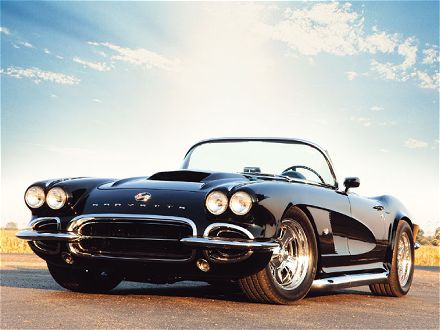
The first generation Corvette was introduced late in the 1953 model year. Originally designed as a show car for the 1953 Motorama display at the New York Auto Show, it generated enough interest to induce GM to make a production version to sell to the public. To keep costs down, GM executive Robert F. McLean mandated off-the-shelf mechanical components, and used the chassis and suspension from the 1952 Chevy sedan. The drivetrain and passenger compartment were moved rearward to achieve a 53/47 front-to-rear weight distribution. It had a 102-inch wheelbase. The engine was the same inline six that powered all other Chevrolet models, but with a higher-compression ratio, three Carter side-draft carburetors, and a more aggressive cam. Output was 150 horsepower. Because there was currently no manual transmission available to Chevrolet rated to handle 150 HP, a two-speed automatic was used. 0-60 mph time was 11.5 seconds. To keep tooling costs in line, the body was made out of fiberglass instead of steel. First production was on June 30, 1953.

1963–1967  The Second Generation - C2
Chevrolet Corvette C2 #5Chevrolet Corvette C2 #12
(Source: http://www.corvettefever.com/featuredvehicles/corp_1010_1967_chevy_corvette_sting_ray/viewall.html)
The second generation (C2) Corvette, which introduced Sting Ray to the model, continued with fiberglass body panels, and overall, was smaller than the first generation. The C2 was later referred to as mid-years.The car was designed by Larry Shinoda with major inspiration from a previous concept design called the "Q Corvette," which was created by Peter Brock and Chuck Pohlmann under the styling direction of Bill Mitchell. Earlier, Mitchell had sponsored a car known as the "Mitchell Sting Ray" in 1959 because Chevrolet no longer participated in factory racing. This vehicle had the largest impact on the styling of this generation, although it had no top and did not give away what the final version of the C2 would look like. The third inspiration was a Mako Shark Mitchell had caught while deep-sea fishing.

1968-1982 The Third Generation - C3


(Source: http://www.corvettefever.com/featuredvehicles/corp_1010_1967_chevy_corvette_sting_ray/viewall.html)


The third generation Corvette, patterned after the Mako Shark II concept car, was introduced for the 1968 model year and was in production until 1982. C3 coupes featured the first use of T-top removable roof panels. It introduced monikers that were later revived, such as LT-1, ZR-1, and Collector Edition. In 1978, the Corvette's 25th anniversary was celebrated with a two-tone Silver Anniversary Edition and an Indy Pace Car replica edition of the C3. This was also the first time that a Corvette was used as a Pace Car for the Indianapolis 500.

1984-1996 The Fourth Generation - C4
Chevrolet Corvette C4 #3
The fourth generation Corvette was the first complete redesign of the Corvette since 1963. Production was to begin for the 1983 model year but quality issues and part delays resulted in only 43 prototypes for the 1983 model year being produced that were never sold. All of the 1983 prototypes were destroyed or serialized to 1984 except one with a white exterior, medium blue interior, L83 350 ci, 205 bhp V8, and 4-speed automatic transmission.After extensive testing and modifications were completed, it was initially retired as a display sitting in an external wall over the Bowling Green Assembly Plant's employee entrance. Later this only surviving 1983 pro
totype was removed, restored and is now on public display at the National Corvette Museum in Bowling Green, Kentucky. It is still owned by GM.

1997-2004 The Fifth Generation - C5
Chevrolet Corvette C5 photo 10
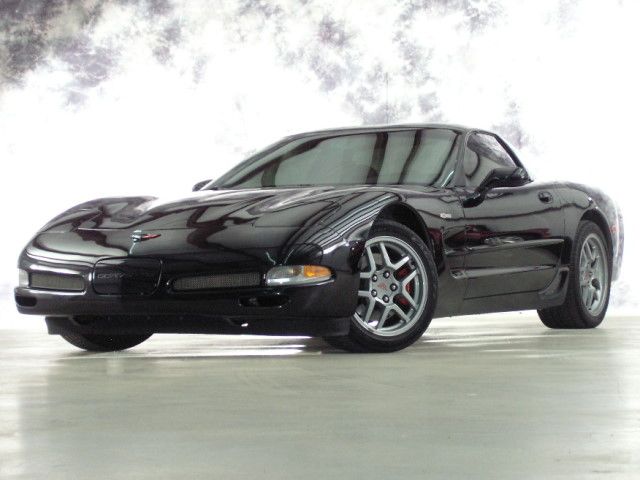
Production of the C5 Corvette began in 1997 and ended with the 2004 model year. Chevrolet used cars like the Nissan 300ZX and Mazda RX-7 as benchmarks for quality and styling due to criticisms the C4 Corvette received when compared to Japanese rivals. The C5 had a top speed of 181 mph (291 km/h) and was judged by the automotive press as improved in nearly every area over the previous Corvette design, thanks to the car's much increased structural rigidity and much more curvaceous design. 

2005-2013 The Sixth Generation - C6
Chevrolet Corvette C6 photo 06
(Source: http://www.corvettefever.com/featuredvehicles/corp_1010_1967_chevy_corvette_sting_ray/viewall.html)Chevrolet Corvette C6 photo 09
(Source: http://www.corvettefever.com/featuredvehicles/corp_1010_1967_chevy_corvette_sting_ray/viewall.html)

The C6 Corvette retained the front engine and rear transmission design of the C5, but was otherwise all-new, including new bodywork with exposed headlamps (for the first time since 1962), a larger passenger compartment, a new 6.0 liter engine and a reworked suspension geometry. It has a longer wheelbase than the C5, but its overall vehicle length and width are less than the C5, to widen appeal to the European market. The 6.0L (364 cu in) LS2 V8 produces 400 bhp (300 kW) at 6000 rpm and 400 lb·ft (540 N·m) at 4400 rpm, giving the vehicle a 0–60 time of under 4.2 seconds. It has a top speed of 190 mph (310 km/h).

2014 The Seventh Generation - C7


(Source: http://www.lepoint.fr/auto-addict/salons/corvette-la-septieme-generation-s-appellera-stingray-14-01-2013-1614434_656.php)

The 2014 Chevrolet Corvette uses an LT1 6.2 L V8 (376 cu in) making 455 bhp (339 kW) or 460 bhp (340 kW) with the optional performance exhaust. The LT1 engine (the "LT1" designation was first used by GM in 1970) is in the Gen 5 family of small block engines, which will be used in GM vehicles as the new small V8 option. It features three technologies new to the GM V8, though widely available on other engines in the marketplace: direct injection, variable valve timing, and an active fuel management system. Fuel injectors are located under the intake manifold. The Corvette remains rear-wheel drive with the transaxle located in the rear. Transmission choices include a 7-speed manual or a 6-speed automatic with paddle shifters. The new interior includes wide-bottom seats as standard, with sportier versions with high side bolsters optional. The Corvette's flag logo has been revised for the new car and a small casting of a stingray has been added to the car's ornamentation.